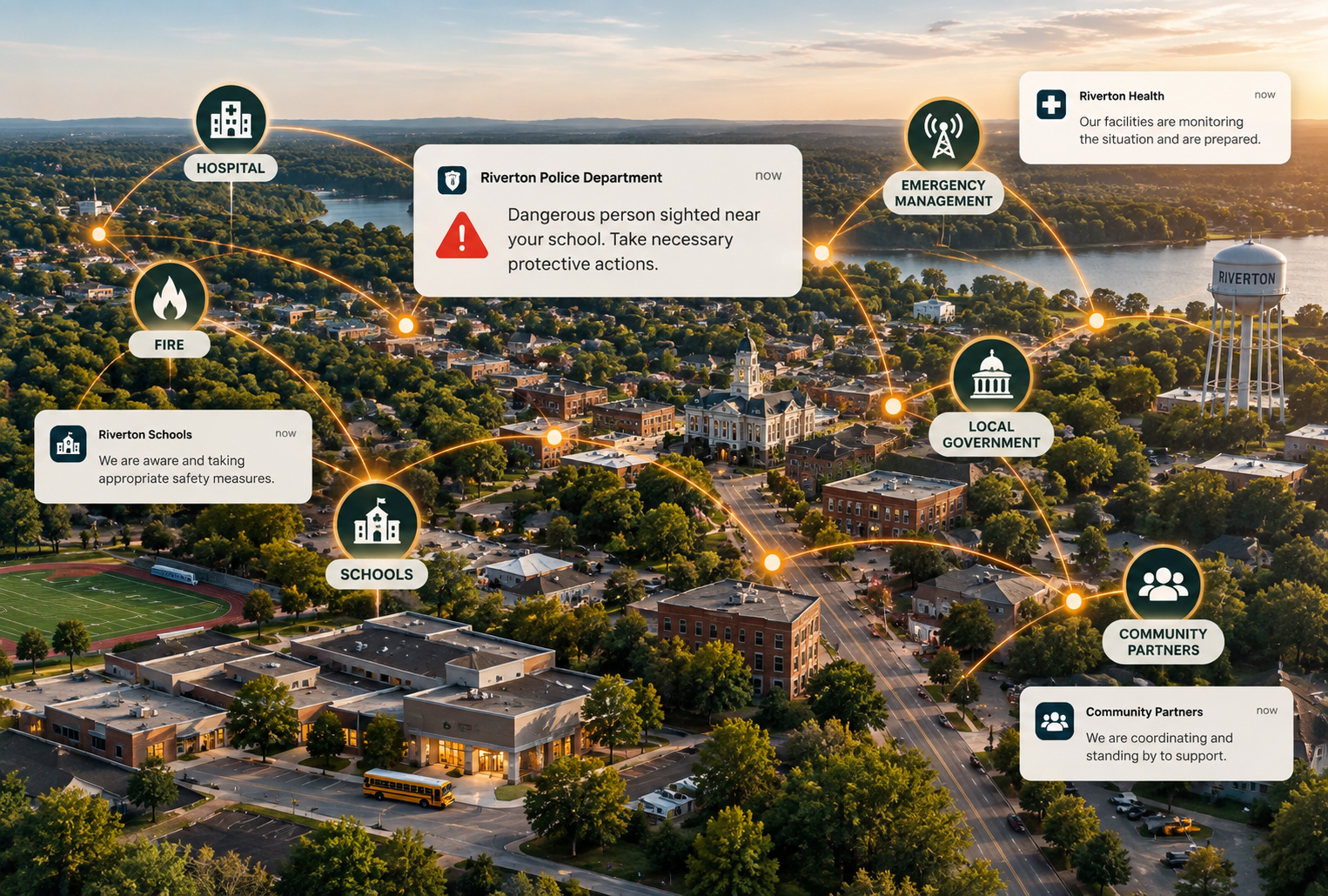
Build a Stronger Community Safety Network
You don’t have to transform everything overnight. Start with one connection, then build from there.
Five Steps. One Stronger Network.
Building a connected community doesn’t happen all at once. It happens one relationship at a time.
Identify who should be involved
Find the schools, public safety agencies, local government, healthcare providers, businesses, nonprofits, and other organizations that play a role in community safety.
Build the relationships that matter.
Bring the right people together before an emergency happens and establish how you’ll work together.
Align plans, roles, and communication.
Make sure organizations understand their roles, share critical information, and know how they’ll communicate when it matters.
Test the network together.
Use exercises, drills, and real-world scenarios to strengthen coordination and uncover gaps before an emergency.
Keep relationships and readiness active.
Continue communicating, practicing, and strengthening the network as your community changes.
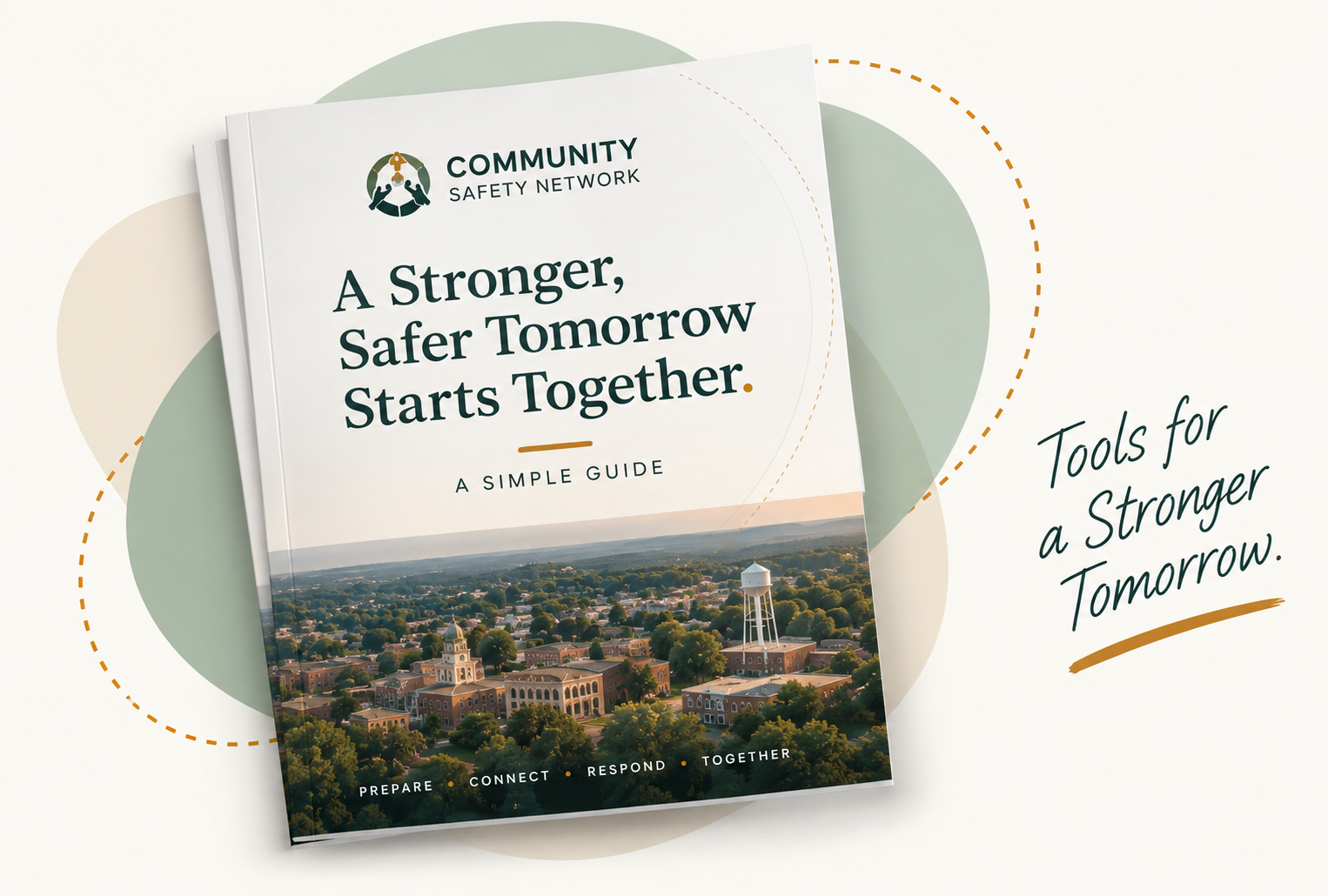
A Practical Guide to Building Your Network.
Our Community Safety Network Simple Guide walks through a practical framework for bringing schools, public safety, local government, healthcare, businesses, nonprofits, and other community partners together around shared preparedness.
Where do You Fit in Your Community?
Police · Sheriff · 9-1-1 / PSAP
When an incident unfolds, you’re responding with incomplete information.
Create a connected network where schools and partners share real-time intelligence. If no network exists yet, your agency becomes the starting point.
Public · Private · Parochial · Charter
When seconds matter, you’re still relying on calls and radio.
Connect directly with responding agencies, share your plan and campus information, and coordinate in real time. Maintain at least one active public safety connection to participate at no cost.
Regional Leadership
Districts depend on you, but they’re not connected when it matters most.
Lead a regional safety network across districts and agencies. You don’t just participate, you help your entire region connect.
County · Regional · State EMA
Large-scale incidents break down when organizations aren’t connected.
Add a regional coordination layer that connects everyone in real time. Many emergency managers use the network most during preparedness: watches, drills, and planning.
Nonprofits · Houses of Worship · Childcare · Recreation
You’re impacted by incidents, but often left out of critical communication.
Receive alerts and stay connected to your local safety network. Participation works from a phone or laptop; most organizations join primarily to receive.
Hospitals · Clinics · Mental Health Providers
Care coordination starts earlier when you are in the picture.
Extend the network into medical destination planning, large-scale incident response, and post-incident recovery for staff, students, and families.
Employers · Venues · Local Business
Workplace and nearby incidents belong in the shared picture.
Local employers receive and share alerts, so community-wide communication reaches more people.
Start With One Connection.
Build the Network From There.
You don’t have to transform everything overnight.
Join the Community Safety Network. Connect with the people responsible for protecting your community. Establish the foundation.
Then expand when you’re ready.
Because every new connection makes the entire community stronger.
Want to Learn More About CrisisGo Connect?
See how CrisisGo Connect brings schools, public safety agencies, and community partners together to strengthen communication, coordination, and response.